Blog / guide

Fall Foliage Road Trip Guide for North Georgia

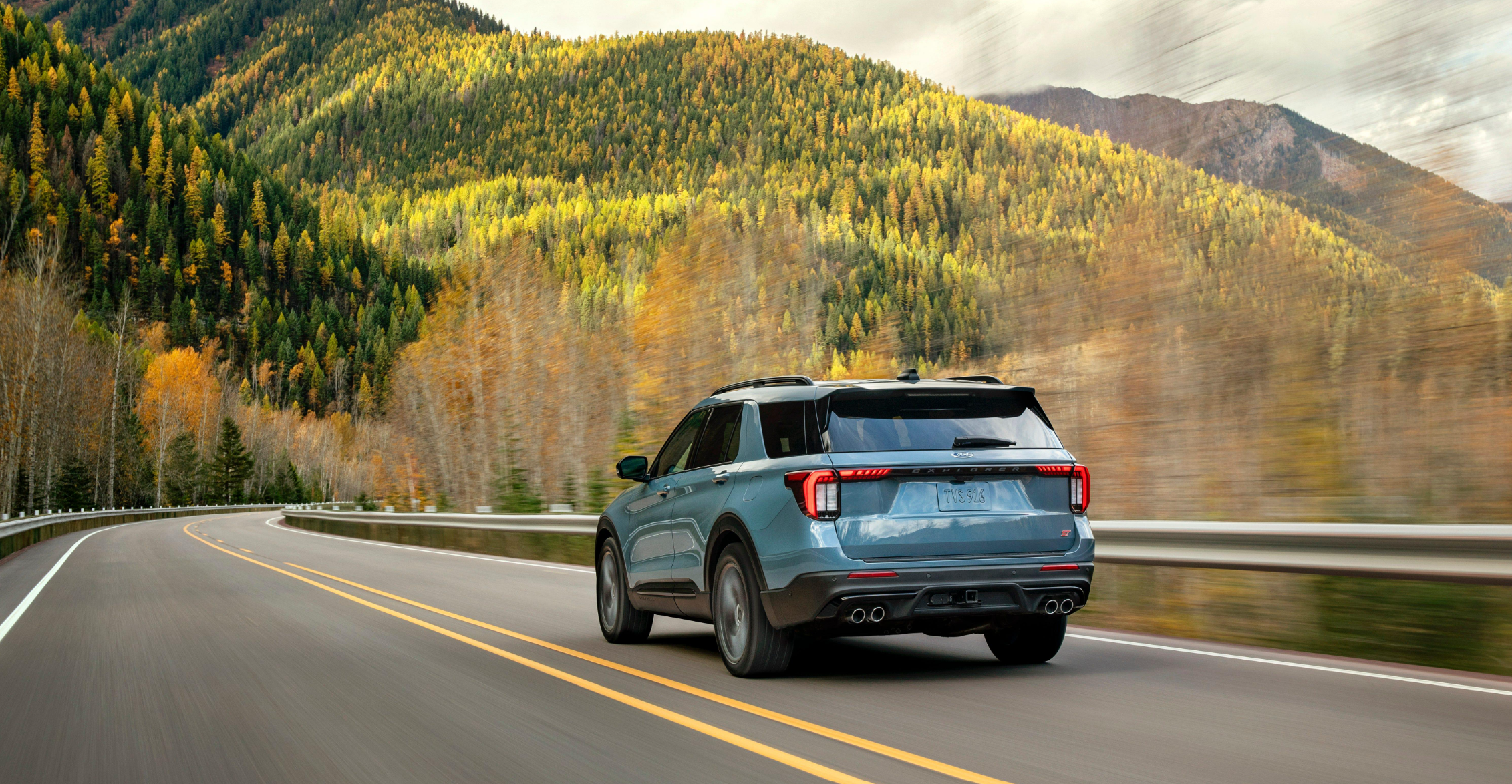
Ford Fall Foliage Road Trip Guide - Mountain backdrop

Experience the Beautiful Allure of the North Georgia Mountains

October changes the view across North Georgia. Green ridgelines turn red and gold, cooler temperatures make afternoon hikes more inviting, and a short drive can feel like a full weekend getaway. Living near Cleveland puts many of the region's best fall foliage routes within a day's drive.

The Ford Explorer and Ford Expedition are both capable family SUVs for these mountain drives. Each offers third-row seating, useful cargo space, and comfort features that make winding roads easier on everyone inside. The better fit depends on how many people are coming and what they need to carry.

Take the Ford Explorer Into the North Georgia Mountains

The 2026 Ford Explorer seats six with its standard second-row captain's chairs. On select models, a second-row bench raises capacity to seven. Every Explorer includes a third row, so children don't have to share the second row with backpacks, jackets, and everything else brought along for the day.

The Explorer offers 16.3 cubic feet of cargo space behind the third row. That provides room for a few day bags or a folded stroller without rearranging the cabin. Folding the rear seats opens up 85.8 cubic feet, which works well for camping gear or bulky picnic supplies.

The Explorer's size also makes sense on mountain roads. It provides three usable rows without feeling as large as a full-size SUV around tight parking areas. Available Intelligent 4WD adds traction when fallen leaves cover a damp road.

Inside, the Ford Digital Experience supports Google Maps and voice commands through a 13.2-inch center touchscreen. Available BlueCruise can reduce strain on compatible divided highways before the route reaches the mountains. Once the road begins to twist, the driver takes control.

Bring More People and Gear in the Ford Expedition

The 2026 Ford Expedition seats seven or eight, depending on its second-row configuration. The third row has enough space to be more than an occasional seat, which matters when older children or adults come along.
A standard-wheelbase Expedition provides up to 22.9 cubic feet behind the third row. The Expedition MAX increases that figure to 37.4 cubic feet. That extra space can hold luggage for an overnight stay while keeping all three rows available.

Fold the passenger rows in an Expedition MAX and cargo volume reaches 123.1 cubic feet. It is the stronger choice when a fall weekend includes camping gear, several large suitcases, or equipment that would overwhelm a smaller SUV.

The Ford Split Gate gives families a convenient place to sit while changing hiking shoes or passing out snacks. Available second-row device holders can keep children occupied during the longer stretches. The cabin's 24-inch panoramic display puts navigation information directly in the driver's view, so you don't have to glance constantly toward the center of the dashboard.

Fall Foliage Destinations Near Cleveland, GA

These leaf-peeping destinations are within reach of John Megel Ford's Cleveland backyard. Drive times are approximate and will change with traffic, weather, and October crowds.

  • Blue Ridge Mountains: The mountain scenery begins just beyond Cleveland, so drivers do not need a single destination to enjoy the color. A trip into Blue Ridge is approximately 54 miles and takes about 1 hour and 15 minutes.
  • Tray Mountain: Near Helen, Tray Mountain is about 20 miles from Cleveland. Reaching the higher areas can take 40 minutes or longer because portions of the route use unpaved forest roads. Check current road conditions before leaving.
  • Vogel State Park: About 22 miles north of Cleveland on U.S. 129, Vogel is generally a 35- to 45-minute drive. The route passes through Neel Gap before reaching the park at the base of Blood Mountain.
  • Amicalola Falls State Park: Plan on approximately one hour to reach the park from Cleveland. The 729-foot waterfall and surrounding mountain views make it an easy choice for a full fall afternoon.

Traffic can build quickly near Helen and popular trailheads in October. Leaving early gives you more time to park and explore before the roads get crowded.

Choose the Right Ford SUV for Your Fall Road Trip

The Explorer handles a family trip without taking up more space than necessary. Its available seven-passenger layout works for school-age children, while the maximum cargo area is useful once the third row is folded.

The Expedition gives every passenger more room and preserves more luggage space with the third row in use. Families traveling with eight people should consider a model with the second-row bench. Consider the Expedition MAX when long trips regularly fill the cargo area.

Sit in both SUVs before deciding. You can judge third-row access and the space behind the rear seat more easily in person than on a spec sheet.

Prepare for Your Fall Drive at John Megel Ford

Visit John Megel Ford in Cleveland to compare the 2026 Ford Explorer and Expedition. Bring the passengers who will normally ride in the third row, and place a stroller or a few travel bags in the cargo area during your test drive.

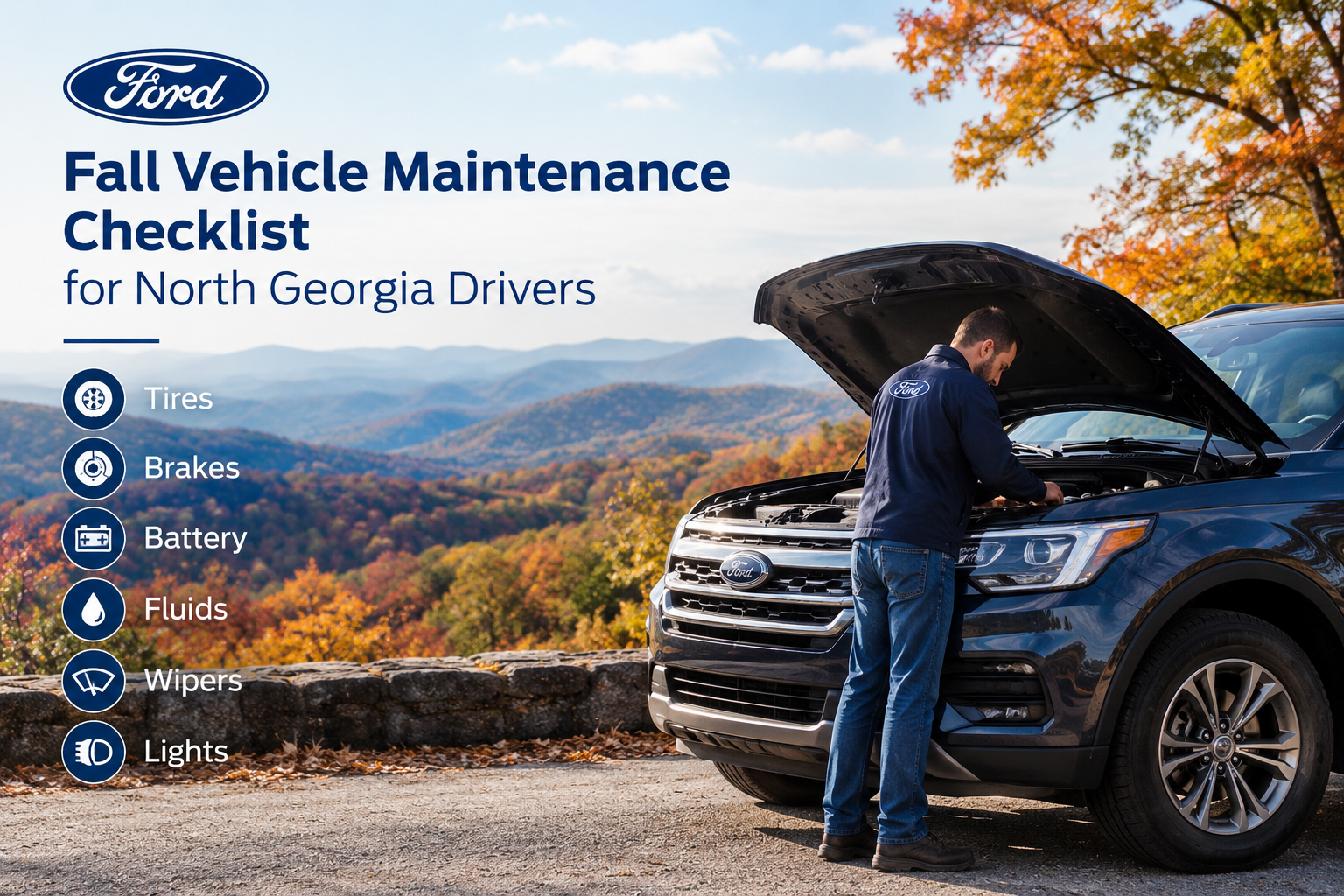
Already have your road trip vehicle? Schedule a pre-trip check at the Quick Lane Tire and Auto Center before heading into the North Georgia mountains. Our technicians can inspect your tires, brakes, battery, fluids, and wiper blades so a maintenance issue does not interrupt your fall weekend.
North Georgia Fall Road Trip FAQs


Which Ford SUV Has More Cargo Space for a Family Road Trip?

The Expedition provides more room with every row in use. It has up to 22.9 cubic feet behind the third row, while the Expedition MAX increases that space to 37.4 cubic feet. The Explorer provides 16.3 cubic feet behind its third row.

Does the Ford Explorer Have Third-Row Seating?

Yes. Every 2026 Explorer has three rows and seats six or seven people. Second-row captain's chairs seat six, while an available bench increases capacity to seven on select models.

What Should I Check Before Driving Into the North Georgia Mountains?

Check tire pressure and tread depth before traveling on wet, leaf-covered roads. Also inspect the brakes, battery, exterior lights, wiper blades, and fluid levels. Quick Lane at John Megel Ford can complete a pre-trip vehicle check before you leave Cleveland.

Posted in:

Related Posts

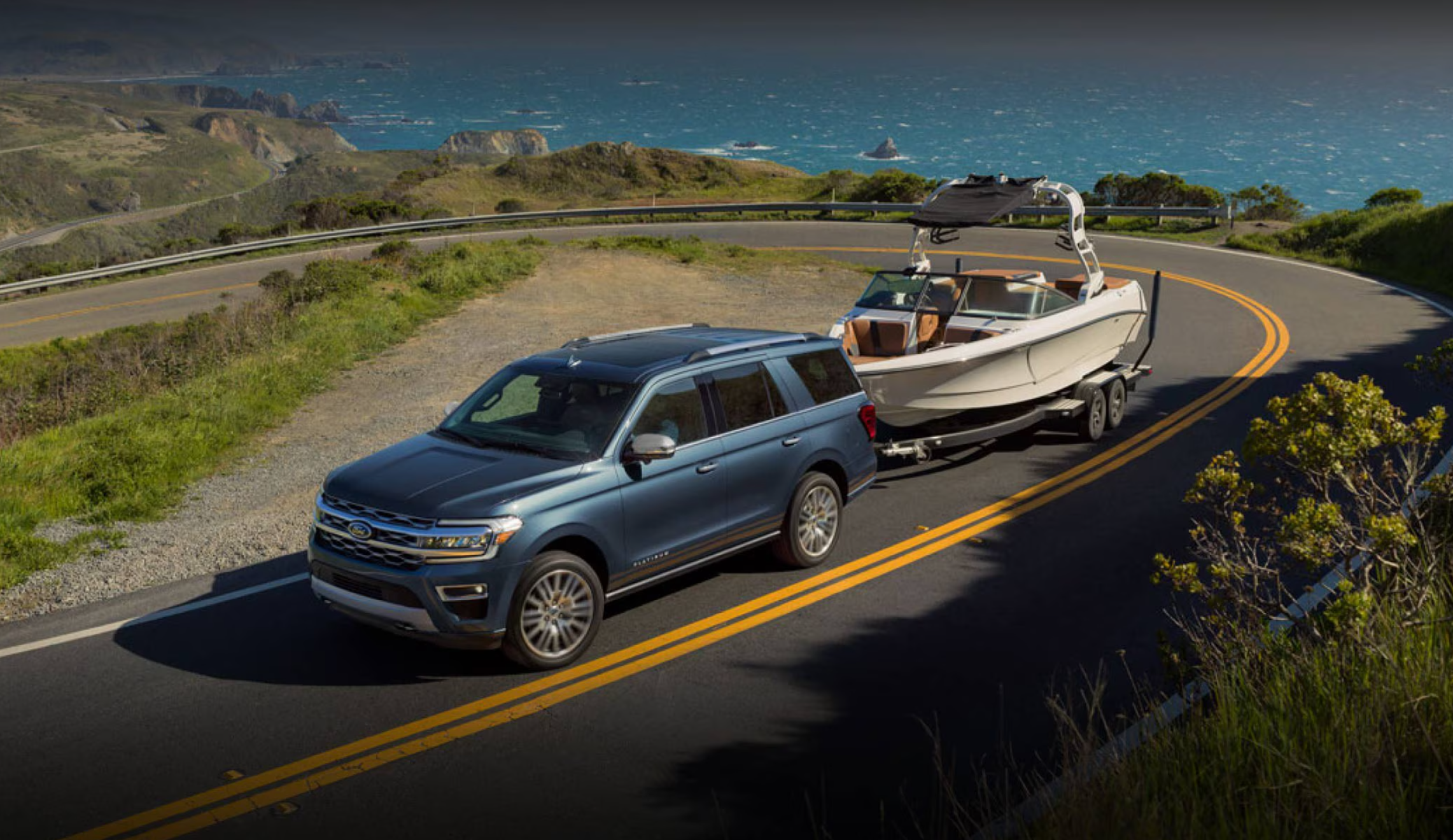
Ford towing boat vehicle

Ford Boat Towing Guide in Cleveland, GA at John Megel

Ford Truck Boat Towing Guide in Cleveland, GA at John Megel Ford What Ford Truck Is Best for Towing Boats? Choosing a truck for towing begins with the trailer, not the truck's maximum rating. A 17-foot aluminum fishing boat places very different demands on a tow vehicle than a 24-foot wake boat. Fuel, batteries, fishing equipment, and a loaded cooler also add weight beyond the boat's published dry weight. Consider all these factors when choosing the best Ford truck for towing boats. For instance, traveling to Lake Barton will likely involve mountain roads with long grades and tight curves, while a trip to Lake Lanier will almost certainly involve heavier traffic. The truck you choose must have sufficient capacity to handle a loaded trailer without operating at its limit. Let's take a closer look at which Ford truck is best for towing boats. This matters around White County. Reaching Lake Burton requires mountain roads with long grades and tight curves. Trips toward Lake Lanier can involve heavier traffic before you ever reach the ramp. The truck needs enough capacity to handle the loaded trailer without operating at its limit. Ford Maverick Towing Capacity The 2026 Ford Maverick can tow 2,000 pounds in its standard configuration. If you need more towing power, adding the available 4K Tow Package bumps capacity up to 4,000 pounds. The higher rating makes the Maverick practical for many smaller recreational boats. A personal watercraft on a single trailer is usually well within its range. Lightweight aluminum fishing boats measuring about 16 to 18 feet can also be a good match once you confirm the complete trailer weight. If you are towing a large fiberglass bass boat or a full-size pontoon, it may be time to step up to a larger truck, like the Ranger. Boats this size can easily exceed the Maverick's maximum towing capacity once you add fuel and equipment. Ford Ranger Towing Capacity The 2026 Ford Ranger delivers the goods with a towing capacity of up to 7,500 pounds with the Trailer Tow Package. Its midsize dimensions also make it easier to maneuver around crowded parking areas and narrow mountain boat ramps. An 18- to 21-foot bass boat typically falls into the Ranger's working range. Many fish-and-ski boats will fit, too. A properly equipped Ranger can pull some 20- to 22-foot pontoons, although the motor, trailer construction, and onboard equipment can create large differences in total weight. This level of capability fits many weekend trips to Lake Burton. The lake is popular for fishing, but it also sees plenty of tubing and water skiing. A Ranger can tow a boat capable of handling either kind of day without requiring a full-size pickup for daily driving. Ford F-150 Towing Capacity The 2026 Ford F-150 reaches a maximum available towing capacity of 13,500 pounds in the correct configuration. Engine choice, axle ratio, cab style, drivetrain, and towing equipment determine an individual truck's rating. That's where larger recreational boats come in. A 21- to 25-foot wake boat can weigh considerably more than its published dry figure once you add the trailer, fuel, and wake-sports equipment. The F-150 provides more room for that additional load. It also matches many pontoons in the 22- to 25-foot range. These boats are popular for relaxed family outings on Lake Lanier, where passengers often bring supplies for a full day on the water. The gear stored in the truck counts against its payload, so the capacity shown on the driver's doorjamb deserves as much attention as the advertised tow rating. The available Pro Trailer Backup Assist system can help when lining up a trailer at the ramp. Four-wheel drive is another useful consideration. It will not increase the truck's tow rating, but it can improve traction on a steep, wet concrete ramp. Ford Super Duty Towing Capacity Ford Super Duty trucks are built for loads beyond most recreational boat owners' needs. The 2026 lineup offers immense towing capability, but the maximum number commonly advertised includes gooseneck towing. Boats are normally carried on conventional bumper-pull trailers, so shoppers should compare the conventional rating for the exact F-250 or F-350 configuration. A Super Duty becomes relevant when the boat and trailer move beyond the comfortable operating range of an F-150. Large cabin boats can cross 10,000 pounds once loaded. Heavy offshore-style boats with multiple outboard engines can weigh even more. Match the Truck to Your Loaded Boat Trailer Boat length is a useful starting point, but it doesn't determine towing weight. A 22-foot aluminum pontoon can weigh far less than a fiberglass wake boat of similar length. Either way, you must account for the trailer's total weight. Start by finding the boat's dry weight, then add the motor if it's listed separately. Be sure to include the trailer and installed batteries. Next, add in fuel and a rough estimate of any other significant gear that will make the trek. Leave room between that total and the truck's maximum rating. This provides a cushion for passengers and cargo while reducing the chance of exceeding the vehicle's payload or rear axle limit. Find a Ford Truck for Towing at John Megel Ford Unsure about which truck is best? Bring your boat and trailer specifications to John Megel Ford in Cleveland, GA. Our team can help you compare the ratings of trucks currently in stock and identify the equipment installed on each one. Contact John Megel Ford today! Ford Truck and Boat Towing FAQs Can a Ford Maverick Tow a Fishing Boat? A Maverick with the available 4K Tow Package can pull many lightweight fishing boats measuring roughly 16 to 18 feet. The boat, motor, trailer, fuel, and equipment must remain within the truck's 4,000-pound maximum rating. Standard Maverick models are limited to 2,000 pounds. Which Ford Truck Can Tow a Pontoon Boat? A properly equipped Ranger can handle many smaller pontoons, particularly models around 20 to 22 feet. Heavier pontoons often call for an F-150. Check the total trailer weight because furniture packages, larger outboard engines, and additional batteries can change it substantially. Is Four-Wheel Drive Necessary for Launching a Boat? Two-wheel drive can handle a dry, well-maintained ramp with an appropriately sized trailer. Four-wheel drive provides additional traction on a steep ramp or one covered with water and loose material. It's useful for frequent trips to mountain lakes, even though it doesn't increase towing capacity.

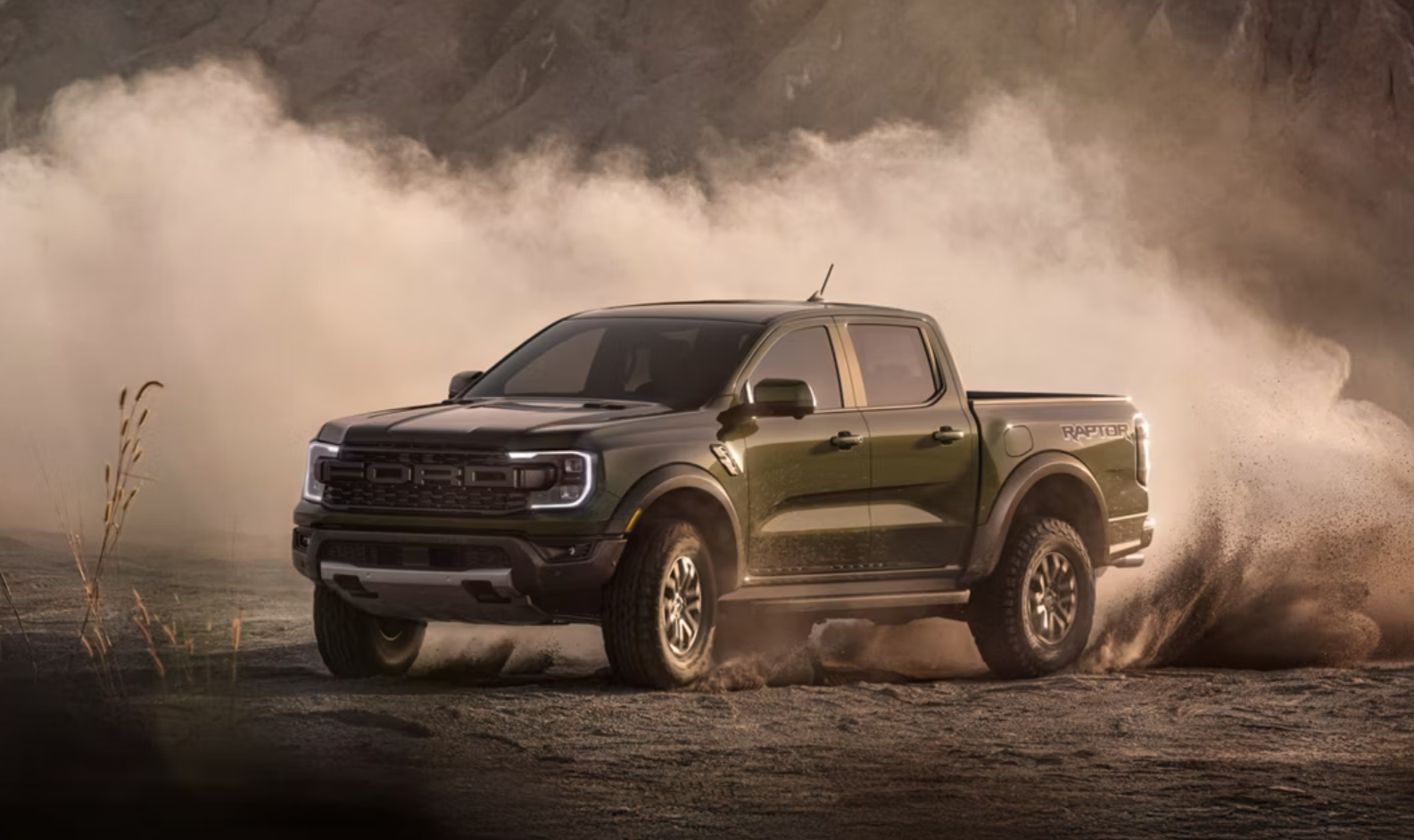
2026 Ford off roading vehicle

2026 Ford Off-Roading Guide at John Megel Ford in Georgia

Explore the Georgia Piedmont with a New Ford Truck or SUV North Georgia offers off-roaders an expansive playground to explore. Whether exploring the slick red clay along forest routes in Chattahoochee-Oconee, climbing rocky gaps up Tray Mountain, or fording the water crossings at Charlie's Creek, the region delivers serious challenges for those willing to venture where the pavement ends. However, before you begin, you must have the right vehicle with the right features. Fortunately, Ford offers several off-road-ready vehicles designed to take you there and back! Let's explore two of the top Ford off-road vehicles you can find at John Megal Ford. 2026 Ford F-150 Highlight Reel The F-150 is the workhorse of this pair. Its bed can carry coolers, muddy boots, hunting equipment, firewood, and camping gear without taking over the cab. Available four-wheel drive provides the traction needed on wet forest roads, while the truck's ground clearance helps it move over ruts that would stop a typical passenger vehicle. North Georgia drivers also have several levels of off-road capability to consider. An F-150 equipped with the FX4 Off-Road Package gets hardware meant for rough ground without turning the truck into an extreme build. The Tremor moves farther in that direction. At the top end, the F-150 Raptor is made for more demanding terrain and faster travel across open dirt. Shop New F-150s Take the F-150 Beyond the Pavement: Off-Road Ready F-150 Trims The F-150 offers multiple trims that come from the factory ready to explore new roads. The F-150 FX4 Offers Cost-Efficient Access to Top-Tier Off-Roading Features The FX4 package is a practical starting point for a 4x4 F-150. It adds an electronically locking rear differential, off-road-tuned shock absorbers, and protective skid plates. The locking differential is especially useful when one rear tire loses traction in mud or hangs over a rut. Instead of letting that wheel spin freely, the axle can send power more effectively across the rear wheels. The F-150 Tremor Shakes Things Up The 2026 F-150 Tremor leaves the factory with 33-inch all-terrain tires and added clearance. Its suspension is tuned for uneven ground, and selectable drive modes help the truck respond to changing surfaces. That matters after rain turns a hard-packed road into slick Georgia clay. The F-150 Raptor Dominates Trails The F-150 Raptor takes a much more aggressive approach. Its long-travel suspension and FOX shocks are designed to absorb hard impacts that would overwhelm an ordinary pickup. Wider bodywork creates room for its large tires. Drivers considering a lifted truck should look closely at a factory-engineered Raptor or Tremor before modifying another trim, since Ford has already matched the suspension, tires, steering, and electronic controls. Shop New Raptors 2026 Ford Bronco Highlight Reel The Bronco feels at home where a wide truck begins to feel cumbersome. Its short overhangs help it approach steep obstacles without burying the bumper. Depending on configuration, the 2026 Bronco offers up to 13.1 inches of ground clearance and can ford up to 37 inches of water. Removable doors and roof panels give the Bronco a completely different personality on a clear day. More important off pavement, however, is the hardware underneath. The Bronco can be configured with large all-terrain tires, locking differentials, and underbody protection for rockier trail sections. Shop New Broncos How the Bronco Handles Tight North Georgia Trails The Bronco Badlands is particularly well suited to slow, technical driving. Electronic locking front and rear differentials help maintain traction when the ground lifts one wheel or becomes deeply uneven. Its front stabilizer bar can disconnect, giving the front suspension more room to articulate over rocks. The available Sasquatch Package adds 35-inch tires and high-clearance fender flares. It gives the Bronco a tough, lifted stance from the factory, but the benefit is not merely visual. The larger tires create more space beneath the vehicle and improve its ability to roll through deep ruts. Ford's G.O.A.T. Modes adjust vehicle systems for specific surfaces. On a loose climb, the Bronco can manage throttle response and traction differently than it does on pavement. Trail Control can hold a low speed while the driver concentrates on steering around rocks or picking a clean line between trees. The Bronco's smaller footprint can be valuable on narrow routes in the Dahlonega area. It also makes the Bronco easier to position near a trailhead when parking space is scarce. Before heading toward Tray Mountain or another forest route, check the current Motor Vehicle Use Map and posted gate status. Seasonal closures and vehicle restrictions can change which roads are open. Find Your Off-Road Ford at John Megel Ford The right Ford choice depends on what you plan to carry and where you intend to drive. Bring the F-150 into the conversation if the trip requires a truck bed, towing capability, or room for bulky hunting equipment. Take a closer look at the Bronco when trail clearance and tight maneuvering matter more. Either way, John Megel Ford can help you compare your options and choose the solution that best fits your needs. Contact us today to find your perfect off-road truck or SUV. Schedule a Test Drive Ford Off-Roading FAQs Which Ford F-150 Trim Is Best for Off-Roading? The F-150 Tremor provides a strong middle ground for North Georgia terrain, balancing price and performance. It comes with 33-inch all-terrain tires, added ground clearance, off-road-tuned suspension, and a locking rear differential. The Raptor adds long-travel suspension and more aggressive capability for drivers who regularly tackle difficult terrain. Is the Ford Bronco Better Off-Road Than the F-150? The Bronco is easier to maneuver on narrow trails because of its smaller footprint and short overhangs. Available front and rear locking differentials also help on rocky or deeply rutted routes. The F-150 is a better fit when the trip requires a truck bed, more towing capability, or space for bulky hunting and camping equipment. Do I Need Four-Wheel Drive for North Georgia Trails? Four-wheel drive provides valuable traction on loose gravel, wet clay, and steep forest roads. Conditions around the Blue Ridge Mountains can change quickly after heavy rain. Drivers should also check current road restrictions and gate closures before entering public forest routes near Tray Mountain or other recreation areas.

Ford Fall Vehicle Maintenance Checklist

Fall Vehicle Maintenance Checklist for North Georgia Drivers

Ensure Your Vehicle Is in Tip-Top Condition for Colder Weather A warm afternoon in Cleveland can make winter feel far away. Then the sun goes down, the temperature drops, and your vehicle suddenly has to work harder than it did a few weeks earlier. That first cold morning exposes problems that were easy to miss during summer. The engine turns over slowly. A tire-pressure warning appears. The defroster takes far too long to clear the windshield. Fall car maintenance gives you time to handle those problems before they interfere with a morning commute or a weekend drive into the North Georgia mountains. Why Cooler Weather Changes What Your Vehicle Needs Cold weather affects several parts of a vehicle at once, but trouble rarely shows up in advance. A battery can start the engine normally throughout October and fail during the first freeze. Tires also lose pressure as the air cools. Elevation makes the change more noticeable around North Georgia. Conditions near Cleveland can differ from those farther into the Blue Ridge Mountains. Shaded mountain roads also stay damp and cold after the sun reaches more open areas. A fall inspection focuses on the components most likely to cause problems as temperatures fall. Complete This Fall Car Maintenance Checklist 1. Find Out How Much Life the Battery Has Left Summer heat takes a toll on a car battery. The damage often becomes obvious only after colder weather arrives and the engine needs more power to start. Do not judge battery health by age alone. A proper test measures its remaining starting strength and can uncover a weak battery before it leaves you stranded. Corrosion around the terminals can also interfere with the connection. Pay attention to how the vehicle starts. If the engine turns over more slowly than usual, get the battery checked, even if it eventually starts. 2. Look Closely at the Tires North Georgia roads leave little room for worn tires. Rain collects on winding pavement, while fallen leaves can create a slick layer in shaded curves. Start with tread depth, but look beyond the tire's center. Heavy wear along one edge can reveal an alignment problem. A visible bulge needs immediate attention. Changes in air pressure catch many drivers by surprise. A tire that was properly inflated during warmer weather can trigger the dashboard warning after a cold night. Inflate each tire to the specification on the driver's doorjamb, not the maximum pressure molded into its sidewall. 3. Replace Wiper Blades That Leave the Windshield Streaked A wiper blade doesn't need to fall apart to be worn out. One wide streak across the driver's line of sight is enough to make a rainy mountain road difficult to see. Watch the blades during the next rain. Skipping across the glass, squeaking, or leaving untouched patches means the rubber is no longer making consistent contact. Leaves also collect below the windshield during fall. Removing that debris keeps it out of drainage areas and prevents pieces from getting pulled under the wiper blades. 4. Test the Heat Before You Need It Turn on the heater during a cool morning and give it enough time to warm the cabin. Weak airflow or air that never gets hot points to a problem you should inspect before winter. The defroster needs its own test. Select the front defrost setting and confirm that air reaches the windshield. The rear glass should begin clearing across the heating lines instead of leaving broad fogged sections. This check takes only a few minutes. It is much better to discover a problem in the driveway than while trying to see through a cloudy windshield before work. 5. Check the Fluids That Protect the Vehicle Coolant needs the proper concentration to protect the engine when temperatures fall. If the reservoir is low again soon after you fill it, check the cooling system for a leak. Also check the engine oil level. If the next oil change is already close, do it in fall to avoid making it another winter chore. The windshield washer reservoir also deserves attention. Fill it with cold-weather washer fluid rather than plain water, which can freeze in the reservoir or lines. Other fluids follow the vehicle's service intervals. Our technicians can review the maintenance schedule and determine what is actually due instead of recommending replacement based on color alone. Fall Maintenance Makes Mountain Driving Less Stressful Winterizing your car in North Georgia is not about preparing for months of heavy snow. It is about being ready for colder starts, sudden frost, and damp mountain roads. Those conditions often arrive during hunting season and holiday travel. They also show up on ordinary mornings when you still have to get to work or take the children to school. Handling maintenance early gives you more control over the timing. You can replace worn tires before the first cold snap creates a rush at local service centers. You can address a weak battery at the dealership instead of in a parking lot miles from home. Schedule Fall Service at John Megel Ford Visit our Service & Parts page to schedule Ford maintenance or have our factory-trained technicians inspect a specific concern. Routine service is also available through John Megel Ford's Quick Lane Tire and Auto Center. Quick Lane handles oil changes, tire service, battery testing, and wiper replacement for Ford vehicles and other makes. We are open until 6 p.m. on weekdays and until 3 p.m. on Saturday. Bring your vehicle to our Cleveland service center now, and take care of fall maintenance before North Georgia temperatures drop. Visit Service Visit Quick Lane Fall Car Maintenance FAQs When Should I Start Winterizing My Car in North Georgia? Early to mid-fall is the best time. This gives you time to replace worn parts before freezing mornings arrive and demand for seasonal service increases. What Are the S igns of a Weak Car Battery? Slow cranking is one of the clearest warnings. You might also notice interior lights dimming as the engine starts. Testing is worthwhile once a battery is three years old because it can fail with little warning. Does Quick Lane Service Vehicles Other Than Ford Models? Yes. Quick Lane at John Megel Ford works on all makes and models. You can visit us for routine maintenance and seasonal checks even if Ford did not build your vehicle.